Energy and green upgrades
EV charger installation: cost and grants in 2026
A home EV charger lets you charge an electric car overnight, usually faster and cheaper than a standard socket. The EV chargepoint grant gives up to 350 pounds towards one for people in flats and rental accommodation. A registered, OZEV-approved installer must fit it. Costs vary, so get a quote.
Ready to compare quotes? We match you to vetted installers who hold the right accreditation. Free for homeowners.
Get matchedWhat it is
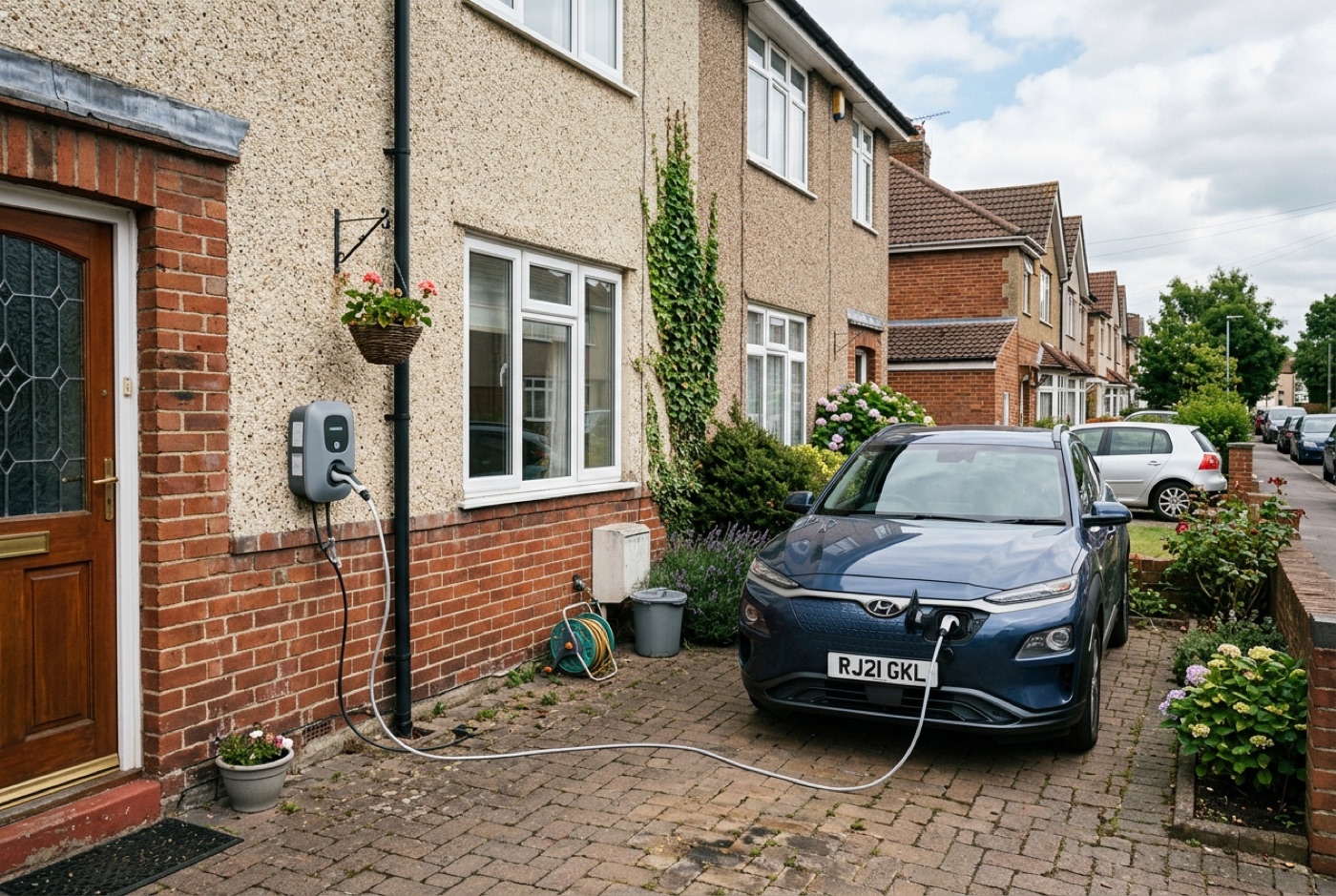
A home EV chargepoint is a dedicated wall-mounted unit that charges an electric car much faster and more safely than a three-pin socket. Most home units are 7kW, which can charge a typical car overnight.
Charging at home, especially on an off-peak tariff, is usually the cheapest way to run an electric car.
How it works
An approved installer checks your electrical supply and fuse board, then mounts the chargepoint, runs a dedicated circuit and fits the required protection. Most installations take a few hours.
Smart features let you schedule charging for cheap off-peak hours and monitor usage from an app. Some homes need a fuse-board upgrade or a supply check first, which the installer will flag.
Cost
- Charger and installation
- Get a quote Cost depends on the unit, the cable run and whether the fuse board needs work.
- EV chargepoint grant
- Up to 350 pounds off For people in flats and rental accommodation, fitted by an approved installer (gov.uk / OZEV).
The headline grant of up to 350 pounds applies to eligible flats and rentals, not all homeowners. We do not quote a single fixed price; get a quote from an OZEV-approved installer.
Who it is for
- Electric car owners or buyers with off-street parking who want faster, cheaper home charging.
- People in flats or rental accommodation, who may qualify for the up to 350 pound chargepoint grant.
- Landlords, who have a separate grant scheme for installing chargepoints at rental properties.
Grants and savings
- EV chargepoint grant: up to 350 pounds towards a home chargepoint for people living in flats or rented accommodation, fitted by an approved installer (gov.uk / OZEV).
- Separate grants exist for landlords and for cross-pavement or on-street charging solutions (gov.uk).
- Charging on an off-peak electricity tariff is usually the cheapest way to run an electric car.
How to choose a vetted installer
- Use an OZEV-approved installer; approval is required to claim the chargepoint grant and signals a competent installer.
- Confirm the installer is also a registered electrician and will issue the correct electrical certificate.
- Check whether your supply or fuse board needs an upgrade before you commit, and get the quote itemised.
Frequently asked questions
Can I still get a grant for a home EV charger?
The EV chargepoint grant gives up to 350 pounds towards a home chargepoint for people living in flats or rented accommodation, fitted by an approved installer. Homeowners in houses are generally not eligible, but separate landlord and on-street schemes exist. Check gov.uk for current rules.
How long does EV charger installation take?
Most home installations take a few hours. It can take longer if your fuse board needs upgrading or the cable run is awkward. An OZEV-approved installer will check your electrical supply first and flag any extra work in the quote.
Why does the installer need to be OZEV-approved?
OZEV approval is required to claim the EV chargepoint grant and indicates the installer meets the scheme's standards. Using an approved, registered electrician also ensures the work is certified and safe, protecting your warranty and your home.
Sources
Editor, VettedHome
Adam leads VettedHome's editorial coverage of UK home services. He is the founder and managing director of Muswell Rose, the commercial strategy and modern systems business behind a portfolio of UK information sites, and he researches and writes the plain-English guides that help homeowners choose between installers and trades, drawing on the standards set by bodies such as MCS, TrustMark, the Energy Saving Trust and the Property Care Association. He is clear about what to check before any work starts.
Last reviewed: 11 June 2026