Home energyEnergy and green upgrades
Solar panel installation and cost in the UK (2026)
Solar panel installation fits photovoltaic panels to your roof to generate electricity from daylight. In the UK, qualifying solar panels carry 0 percent VAT until 31 March 2027. Costs vary by roof size, panel count and access, so the sensible step is to get quotes from MCS-certified installers rather than rely on a single headline figure.
We read your enquiry and reply by email. Check an installer's accreditation before work starts, using the guide below.
On this page
What it is
A solar photovoltaic (PV) system uses roof-mounted panels to turn daylight into electricity that powers your home, with any surplus either stored in a battery or exported to the grid. Most UK homes fit between six and sixteen panels depending on roof space and how much electricity the household uses.
Solar is the largest and fastest-growing green-upgrade category in the UK. It pairs naturally with home battery storage and, increasingly, with a heat pump, because both run on electricity that your panels can help supply.
How it works
An installer surveys your roof for orientation, pitch, shading and structural condition, then designs a system sized to your usage. South-facing roofs generate most, but east and west roofs still work well.
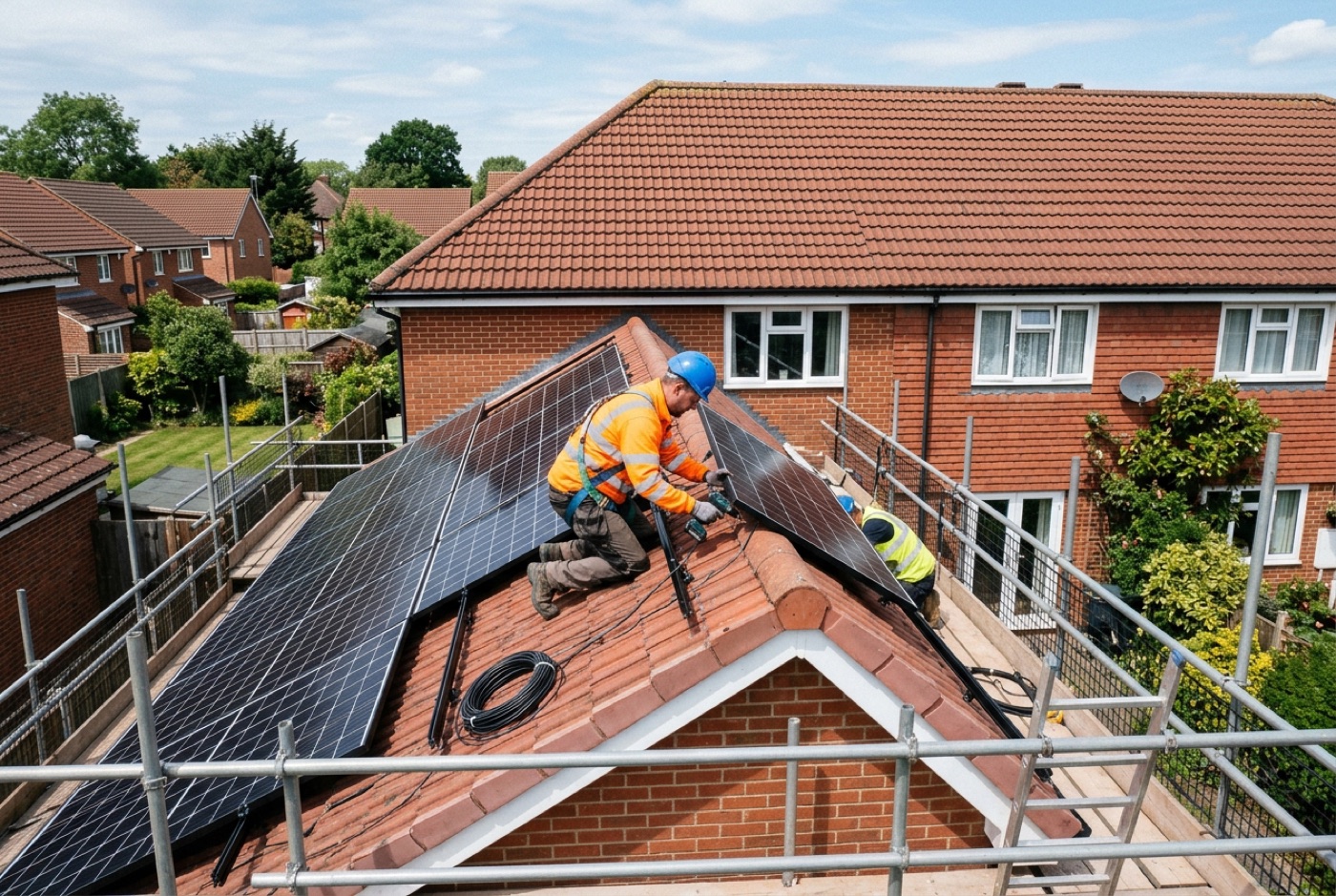
Installation is usually completed in one to three days. Scaffolding goes up, panels and mounting rails are fixed to the roof, an inverter is wired in to convert the direct current the panels produce into the alternating current your home uses, and the system is connected and tested.
After commissioning, an MCS certificate is issued. That certificate is what lets you register for an export tariff, so keep it safe.
Cost
- Typical system
- Get a quote Cost depends on panel count, roof access, inverter and whether a battery is added. Ask each installer to itemise.
- VAT
- 0% until 31 March 2027 Qualifying solar panels carry 0 percent VAT in the UK until 31 March 2027, after which it is set to revert to 5 percent.
- Adding a battery
- Get a quote A battery is a separate cost but also currently carries 0 percent VAT.
We do not quote a single fixed price because real costs vary widely by roof and system. The Energy Saving Trust publishes general guidance, but the only reliable number is a written quote from an MCS-certified installer.
Who it is for
- Homeowners with an unshaded roof and reasonable daylight exposure who want to cut their electricity bills and reduce reliance on the grid.
- Households planning to add a battery or a heat pump, since solar lowers the running cost of both.
- Anyone wanting to lock in the 0 percent VAT saving before it is due to end on 31 March 2027.
Grants and savings
- 0 percentQualifying solar panels carry 0 percent VAT until 31 March 2027 (gov.uk).
- Once installed and MCS-certified, you can apply for a Smart Export Guarantee (SEG) tariff to be paid for surplus electricity you export to the grid (Ofgem).
- Lower-income and benefit-eligible households may qualify for help under ECO4 or the Great British Insulation Scheme, both run by Ofgem.
How to choose an installer
- Use an MCS-certified installer. MCS certification is normally required to access export tariffs and signals a recognised quality standard.
- Check the installer is also a member of a consumer-protection body such as RECC or HIES, and ask for the manufacturer and workmanship warranties in writing.
- Get at least three itemised quotes so you can compare like for like.
Frequently asked questions
How much does solar panel installation cost in the UK?
It depends on the number of panels, your roof and whether you add a battery, so there is no single figure. Qualifying solar carries 0 percent VAT until 31 March 2027. Get itemised quotes from MCS-certified installers to compare real prices.
Do I still get paid for exporting solar electricity?
Yes. Once your system is MCS-certified you can apply for a Smart Export Guarantee (SEG) tariff, under which a licensed energy supplier pays you for surplus electricity you export to the grid. Rates vary by supplier.
Is the 0% VAT on solar panels ending?
The 0 percent VAT rate on qualifying energy-saving materials, including solar panels, applies until 31 March 2027. After that date it is set to revert to 5 percent, so installing before the deadline locks in the saving.
Why does the installer need to be MCS-certified?
MCS certification is normally required to register for an export tariff and is a recognised quality standard for renewable installations. Using an MCS-certified installer protects your access to payments and warranties.
Sources

Editor, VettedHome
Adam leads VettedHome's editorial coverage of UK home services. He is the founder and managing director of Muswell Rose, the commercial strategy and modern systems business behind a portfolio of UK information sites, and he researches and writes the plain-English guides that help homeowners choose between installers and trades, drawing on the standards set by the relevant bodies for each job, such as Gas Safe Register, NICEIC, MCS, TrustMark and the Property Care Association. He is clear about what to check before any work starts.
Last updated: