Home energyEnergy and green upgrades
Loft insulation: cost and ECO4 grants (2026)
Loft insulation slows heat escaping through your roof and is one of the cheapest energy upgrades. Eligible households may get it funded through ECO4, which runs to 31 December 2026. The Great British Insulation Scheme closed on 31 March 2026 and is no longer taking applications. The Energy Saving Trust recommends a depth of 270mm of mineral wool. Get a quote, or check grant eligibility first.
We read your enquiry and reply by email. Check an installer's accreditation before work starts, using the guide below.
On this page
What it is
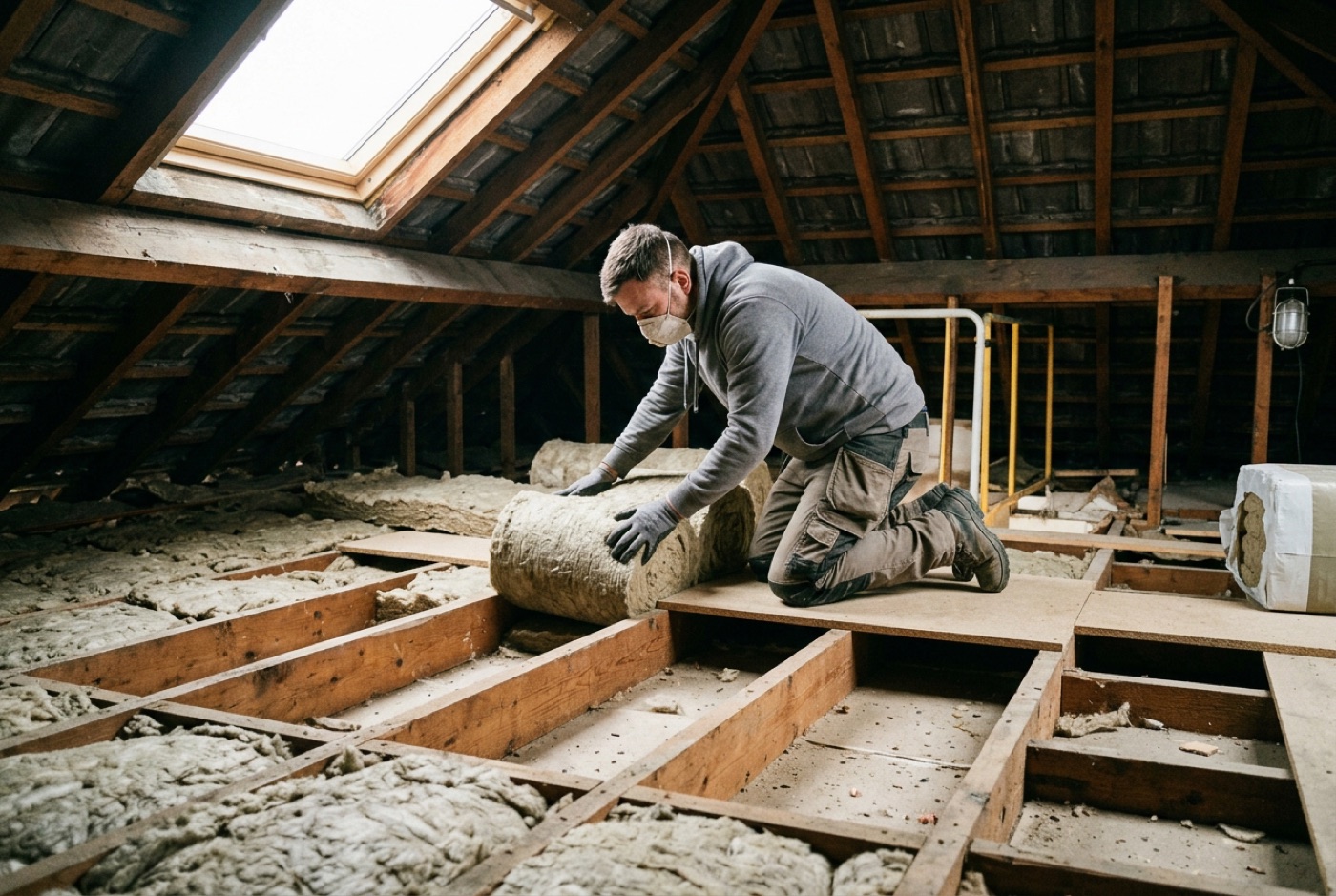
Loft insulation is a layer of material, usually mineral wool, laid across the floor of an unused loft to slow the heat rising out of your home. Around a quarter of heat can be lost through an uninsulated roof, so it is often the first upgrade to make.
It is inexpensive, quick and, for eligible households, frequently fully funded by a government scheme.
How it works
For a standard accessible loft, insulation is rolled out between and over the ceiling joists to the recommended depth. The Energy Saving Trust recommends 270mm of mineral wool.
Where the loft is used for storage, boarding can be raised on battens so insulation depth is not squashed. Rooms in the roof, or hard-to-treat lofts, need a specialist approach.
A straightforward loft is often done in a few hours.
Cost
- Standard loft (DIY or installed)
- Get a quote Among the cheapest measures; cost depends on loft size and access.
- If grant-funded
- Potentially fully funded ECO4 may cover the cost for eligible households, to 31 Dec 2026 (Ofgem).
- Recommended depth
- 270mm mineral wool Energy Saving Trust recommendation.
Who it is for
- Almost every home with an accessible, uninsulated or under-insulated loft, since it is cheap and effective.
- Lower-income and benefit-eligible households, who may get it funded through ECO4 before it ends on 31 December 2026.
- Homeowners planning a heat pump, since good insulation helps it run efficiently.
Grants and savings
- ECO4: means-tested funding for insulation in eligible homes, running to 31 December 2026, delivered by obligated suppliers (Ofgem).
- Loft insulation reduces heat loss through the roof, lowering heating bills; the Energy Saving Trust recommends 270mm of mineral wool.
How to choose an installer
- For grant-funded work, the installer must be TrustMark-registered and the measure delivered under the scheme rules.
- Check the loft is dry and well-ventilated first; insulating a damp loft without addressing ventilation can cause condensation.
- Get the recommended depth confirmed and, for grant work, a written statement of what is covered.
Frequently asked questions
Can I get loft insulation for free?
Eligible lower-income or benefit-receiving households may get loft insulation fully funded through ECO4, which runs to 31 December 2026, delivered by a TrustMark-registered installer. Eligibility is means-tested, so check the criteria on gov.uk before assuming you qualify. The Great British Insulation Scheme closed 31 March 2026.
How deep should loft insulation be?
The Energy Saving Trust recommends a depth of 270mm of mineral wool for a standard loft. Existing insulation that is thinner or compressed can be topped up. If you board the loft for storage, raise the boards so the insulation is not squashed.
Does loft insulation help with a heat pump?
Yes. Reducing heat loss means a heat pump can keep your home warm at a lower flow temperature, which makes it more efficient and cheaper to run. Good loft insulation is one of the simplest ways to prepare a home for a heat pump.
Sources

Editor, VettedHome
Adam leads VettedHome's editorial coverage of UK home services. He is the founder and managing director of Muswell Rose, the commercial strategy and modern systems business behind a portfolio of UK information sites, and he researches and writes the plain-English guides that help homeowners choose between installers and trades, drawing on the standards set by the relevant bodies for each job, such as Gas Safe Register, NICEIC, MCS, TrustMark and the Property Care Association. He is clear about what to check before any work starts.
Last updated: