Property problemsProperty fixes and removals
Cavity wall insulation removal: cost, the CIGA claim and who to call
Cavity wall insulation sometimes needs removing when it has slumped or let damp bridge the wall, causing penetrating damp inside. Removal means extracting the material and drying the cavity. If the original install carried a CIGA guarantee, you may be able to claim, so check that before paying. Costs vary, so get a survey and quote.
We read your enquiry and reply by email. Check a specialist's accreditation before work starts, using the guide below.
On this page
What it is
Cavity wall insulation fills the gap between two layers of an external wall. It usually works well, but in exposed or unsuitable walls it can slump or let rain bridge the cavity, causing damp on the inside wall.
This page is about removal, cost and the guarantee route.
The survey and the work
A survey first confirms the insulation is genuinely the cause of the damp, since not all cavity damp comes from the insulation. A borescope inspection through small holes can show slumped or saturated material.
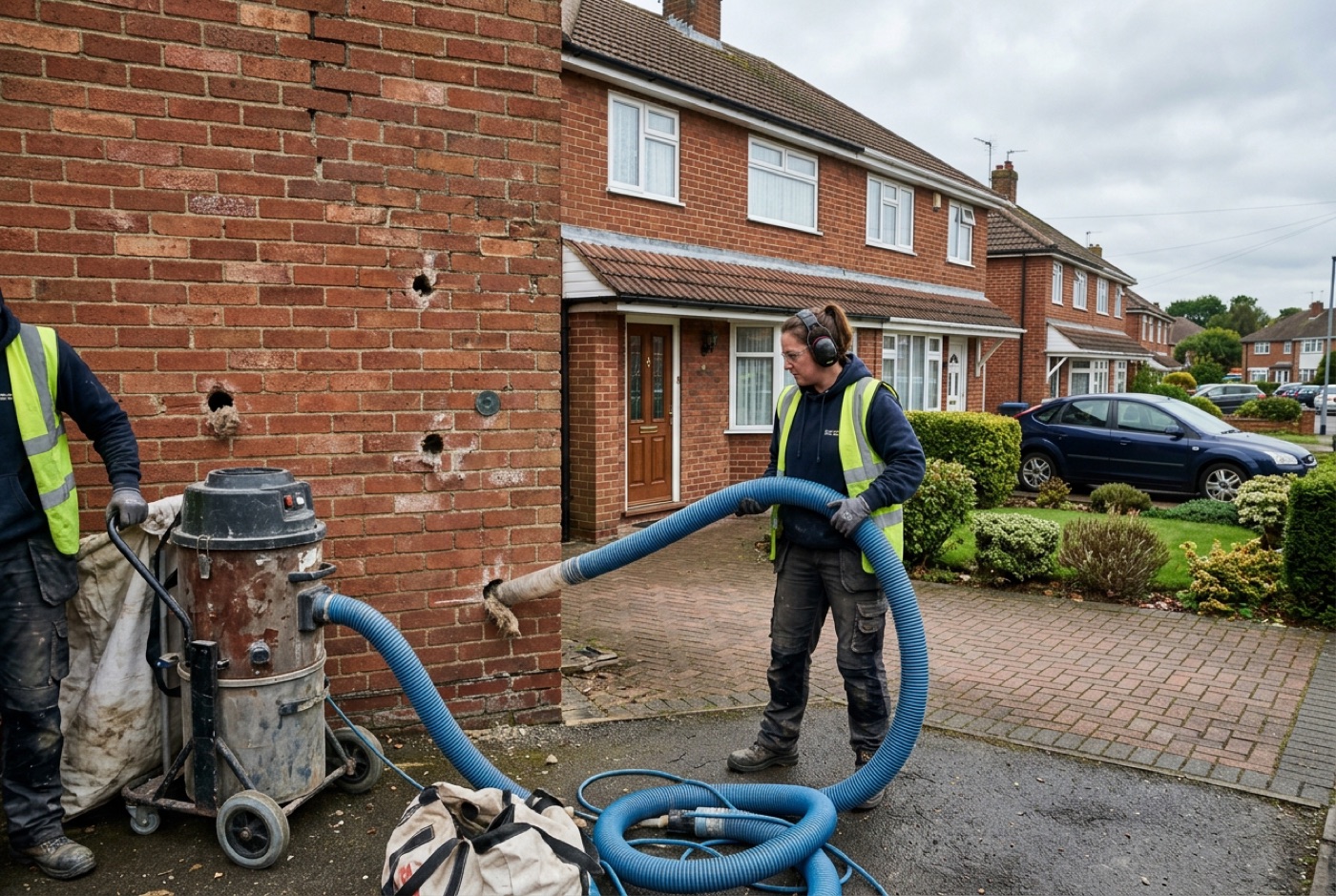
Removal, or extraction, is done by drilling access holes and using specialist equipment to draw the material out, after which the cavity is left to dry before any decision on re-insulating.
Cost
- Survey / borescope inspection
- Get a quote Confirms the insulation is the cause before any extraction.
- Extraction
- Get a quote Driven by the wall area, the material type and access.
- Via a CIGA claim
- Potentially covered If the original install had a CIGA guarantee, faulty-installation problems may be covered (CIGA).
Outside a guarantee claim, costs depend on wall area, material and access, so get a survey and an itemised quote.
Who it is for
- Homeowners with damp on internal walls that a survey has linked to failed or slumped cavity wall insulation.
- Owners whose cavity insulation was installed under a guarantee and who want to check the CIGA claim route first.
- Buyers or sellers where damp linked to cavity insulation has been flagged in a survey.
The mortgage and sale angle
- Damp linked to failed cavity insulation can be flagged in a mortgage valuation, so resolving it, and documenting the fix, is what keeps a sale on track.
- The money-saving angle is the CIGA guarantee: the Cavity Insulation Guarantee Agency provides a 25-year guarantee on registered installations, so a faulty install may be put right at no cost to you (CIGA).
- A buyer reassured by evidence the cavity has been extracted and dried, or repaired under guarantee, is more likely to proceed.
How to choose a specialist
- Use a specialist who surveys with a borescope and confirms the insulation is the cause before recommending extraction.
- Check the CIGA guarantee status of the original install first; the CIGA website explains how to make a claim.
- Get the extraction scope, drying period and any re-insulation advice in writing, and check the firm on Companies House.
Frequently asked questions
When does cavity wall insulation need removing?
When it has slumped, become saturated or is letting rain bridge the cavity and cause damp on the inside wall, especially in exposed or unsuitable walls. A borescope survey confirms whether the insulation is genuinely the cause before any extraction.
Can I claim for failed cavity wall insulation?
Possibly. If the original installation was registered with the Cavity Insulation Guarantee Agency, it carries a 25-year guarantee, and problems caused by faulty installation may be put right under that guarantee. The CIGA website explains how to raise a concern.
How much does cavity wall insulation removal cost?
It depends on the wall area, the material and access, so there is no single figure. A survey is needed first, then an itemised quote for the extraction and drying.
Sources
Send an enquiry

Editor, VettedHome
Adam leads VettedHome's editorial coverage of UK home services. He is the founder and managing director of Muswell Rose, the commercial strategy and modern systems business behind a portfolio of UK information sites, and he researches and writes the plain-English guides that help homeowners choose between installers and trades, drawing on the standards set by the relevant bodies for each job, such as Gas Safe Register, NICEIC, MCS, TrustMark and the Property Care Association. He is clear about what to check before any work starts.
Last updated: