Trades guideElectrical service
EICR electrician: the electrical safety report and who needs one
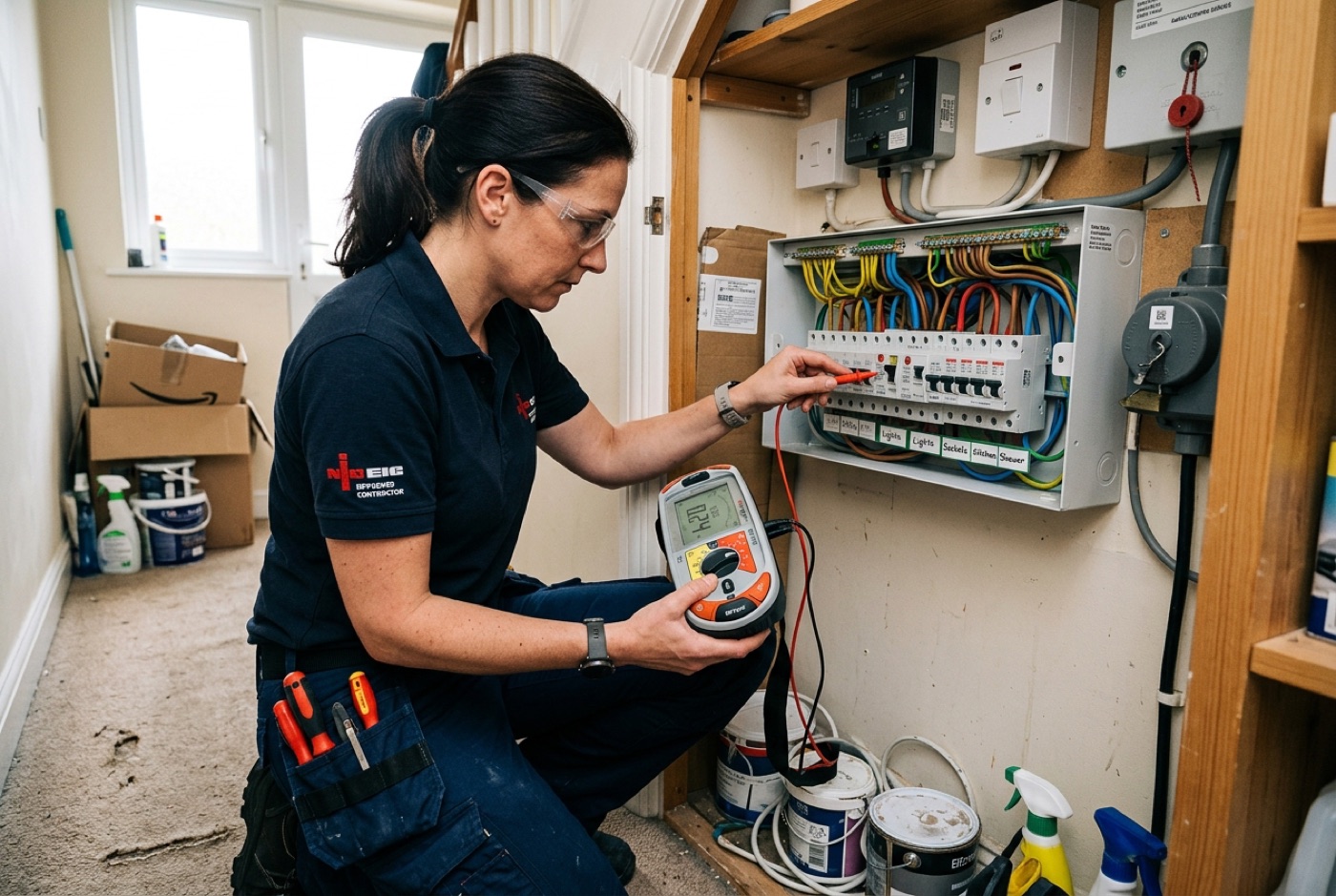
An EICR (Electrical Installation Condition Report) is a periodic inspection of a property fixed wiring by a registered electrician. Private landlords in England must have one at least every five years. The report grades faults C1 (danger present), C2 (potentially dangerous) or C3 (improvement recommended). We read your enquiry and reply by email; we do not pass your enquiry to a trade.
Need this done? Tell us the job and your postcode and you can send us an enquiry and we will reply by email. Check the accreditation of any trade before work starts. Free for homeowners.
On this page
Who needs an EICR
- Private landlords in England: legally required at least every five years, and at a change of tenancy.
- Homeowners: recommended roughly every ten years, or before selling.
- Anyone buying a property: a sensible check before exchange.
- After a fault, a flood, or major electrical work.
What the codes mean
- C1: danger present, a risk of injury, requires immediate action.
- C2: potentially dangerous, requires remedial work for a satisfactory report.
- C3: improvement recommended, does not by itself fail the report.
- FI: further investigation required without delay.
What "satisfactory" requires
A report is unsatisfactory if it carries any C1, C2 or FI code. For a landlord, the law requires remedial work to be completed and confirmed within 28 days of the report (or sooner if the inspector specifies). A C3 alone does not fail the report, but it flags improvements worth doing.
What it costs
- EICR inspection
- Get a quote Depends on property size and the number of circuits.
- Remedial work
- Quote separately C1 and C2 faults must be put right for a satisfactory report. Get them itemised.
How to choose a trade
- Use an electrician registered with a competent-person scheme (NICEIC, NAPIT, ELECSA or Stroma).
- Be wary of a very cheap EICR that then quotes heavily for remedial work; get remedial costs itemised against the codes.
- For a landlord report, confirm remedial work will be completed and certified within the legal window.
Frequently asked questions
Who legally needs an EICR?
Private landlords in England must have an EICR at least every five years and at a change of tenancy, with any C1 or C2 faults put right within 28 days. Homeowners are not legally required to have one, but it is recommended roughly every ten years or before selling.
What do the EICR codes mean?
C1 means danger is present and needs immediate action. C2 means potentially dangerous and needs remedial work for a satisfactory report. C3 means improvement recommended and does not fail the report. FI means further investigation is required without delay. Any C1, C2 or FI makes the report unsatisfactory.
Why are some EICR quotes so cheap?
A very low inspection price is sometimes a hook, recovered through heavily priced remedial work. Use a registered electrician, and ask for any remedial work to be itemised against the specific codes, so you can see whether the fixes are genuinely needed and fairly priced.
Sources

Editor, VettedHome
Adam leads VettedHome's editorial coverage of UK home services. He is the founder and managing director of Muswell Rose, the commercial strategy and modern systems business behind a portfolio of UK information sites, and he researches and writes the plain-English guides that help homeowners choose between installers and trades, drawing on the standards set by the relevant bodies for each job, such as Gas Safe Register, NICEIC, MCS, TrustMark and the Property Care Association. He is clear about what to check before any work starts.
Last updated: