Trades guideElectrical service
Consumer unit replacement: a local electrician for your fuse box
A consumer unit (fuse box) replacement brings the board where every circuit terminates up to the current wiring regulations, with proper RCD or RCBO protection and certification. It is most often advised when an EICR flags missing RCD protection or a C2 fault, or when an EV charger or heat pump needs a circuit the old board cannot provide. We read your enquiry and reply by email; we do not pass your enquiry to a trade.
Need this done? Tell us the job and your postcode and you can send us an enquiry and we will reply by email. Check the accreditation of any trade before work starts. Free for homeowners.
On this page
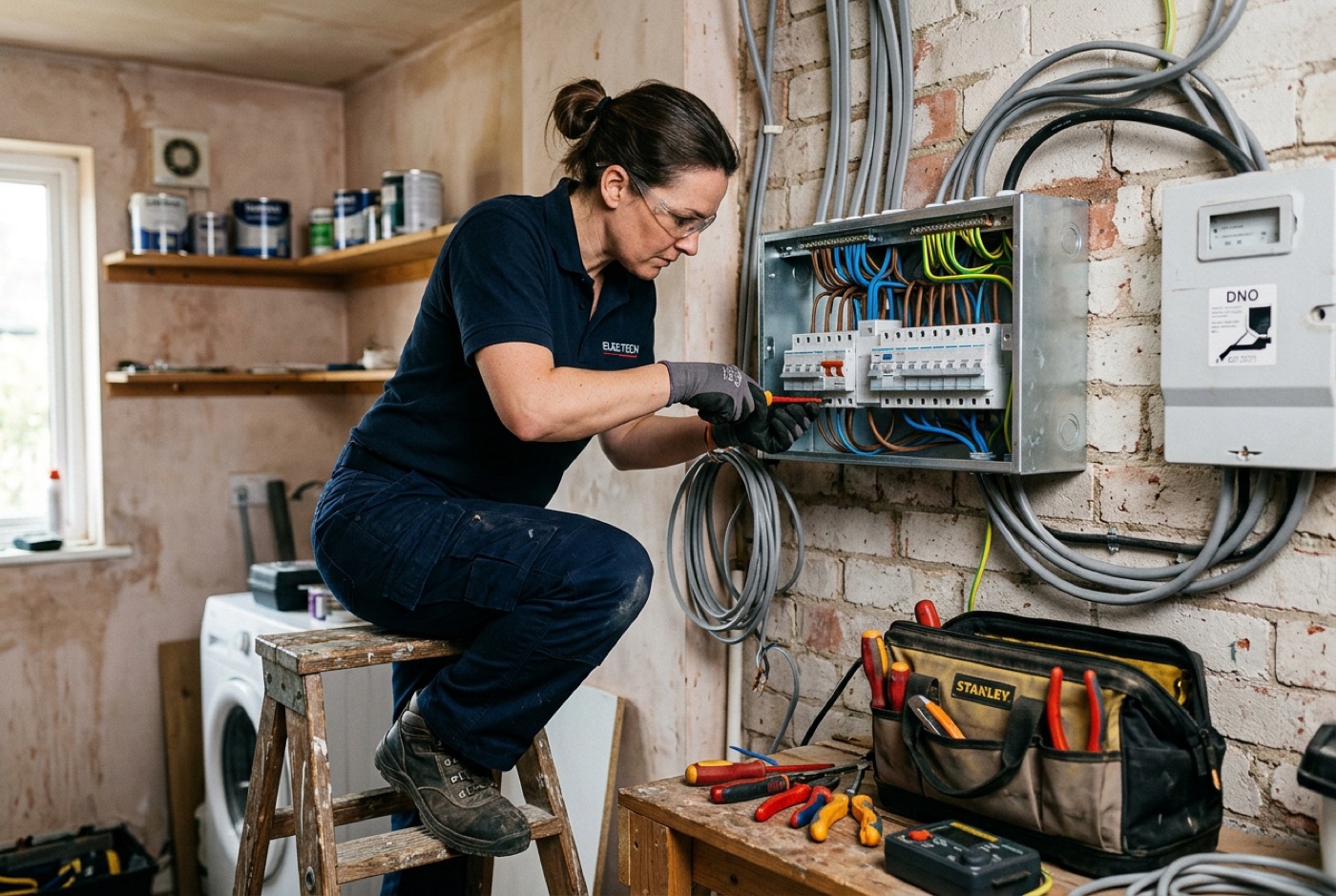
When you need a replacement
- A board flagged C2 on an EICR, for example missing RCD protection for bathroom socket circuits or for sockets likely to power equipment used outdoors.
- Adding an EV charger or a heat pump where the existing board cannot provide the protection the new circuit needs.
- A plastic board under a wooden staircase or on the only escape route, which Electrical Safety First guidance codes C3 (improvement recommended).
What a compliant job includes
- The new board, with RCD or per-circuit RCBO protection.
- A main earth and bonding upgrade if the existing is undersized.
- Surge protection where required.
- An Electrical Installation Certificate at handover.
- Part P notification through the electrician competent-person scheme.
What it costs
- Consumer unit replacement
- Get a quote Depends on the board type (split-load or RCBO), circuit count and any bonding upgrade.
- Certification
- EIC + Part P notification Part of a compliant job, not an add-on.
For the full breakdown of board types and what an honest quote should include, see the consumer unit upgrade cost guide.
How to choose a trade
- Use an electrician registered with a competent-person scheme (NICEIC, NAPIT, ELECSA or Stroma).
- Ask the quote to name the board make and the RCBO or MCB count, and to list bonding as a contingency line.
- Confirm the EIC is issued at handover and the work is notified under Part P.
Frequently asked questions
When does a fuse box need replacing?
When an EICR flags it C2 (potentially dangerous), for example for missing RCD protection on bathroom or outdoor-use socket circuits, or when you add an EV charger or heat pump that the existing board cannot protect. A plastic board or rewireable fuses are not a fault on their own if they still protect the circuits properly.
What does a consumer unit replacement include?
The new board with RCD or RCBO protection, any earth and bonding upgrade, surge protection where required, the Electrical Installation Certificate, and Part P notification through the electrician scheme. Be wary of a low headline price with "plus extras" wording, which often grows on site.
Will VettedHome send my details to lots of electricians?
No. We read your enquiry and reply by email; we do not pass your enquiry to a trade. We are an independent information site, free for homeowners, and not an electrician ourselves.
Sources

Editor, VettedHome
Adam leads VettedHome's editorial coverage of UK home services. He is the founder and managing director of Muswell Rose, the commercial strategy and modern systems business behind a portfolio of UK information sites, and he researches and writes the plain-English guides that help homeowners choose between installers and trades, drawing on the standards set by the relevant bodies for each job, such as Gas Safe Register, NICEIC, MCS, TrustMark and the Property Care Association. He is clear about what to check before any work starts.
Last updated: