Trades guidePlumbing service
Emergency plumber: how to get a local one fast
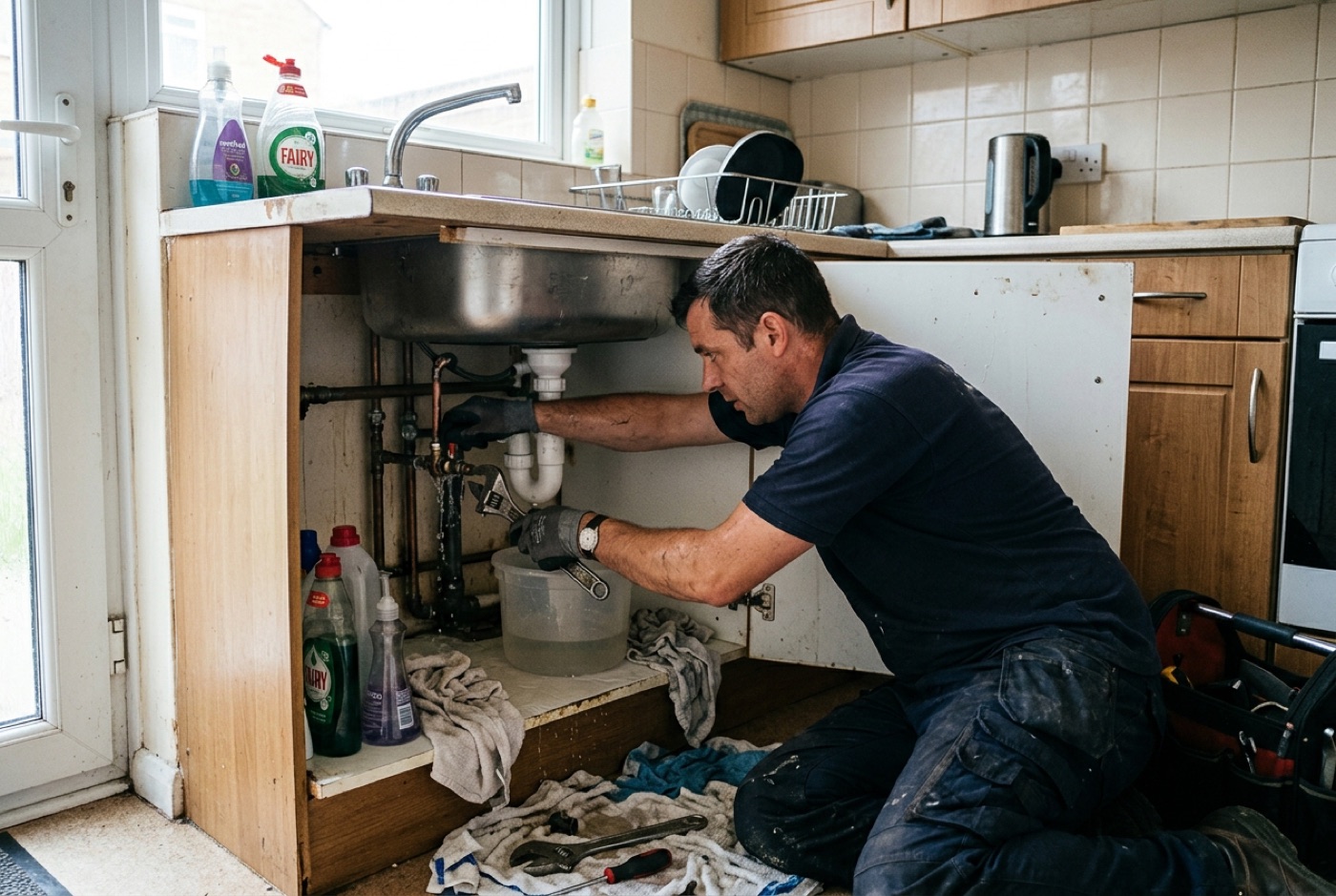
An emergency plumber handles a burst pipe, a flooding boiler or a leak you cannot isolate. The first move is to shut off the stopcock and contain the water, then get a local plumber. We read your enquiry and reply by email; we do not pass your enquiry to a trade.
Need this done? Tell us the job and your postcode and you can send us an enquiry and we will reply by email. Check the accreditation of any trade before work starts. Free for homeowners.
On this page
What counts as a plumbing emergency
- A burst or leaking pipe you cannot isolate at the stopcock.
- A boiler or cylinder leaking water into the property.
- A blocked drain backing up into the home.
- A loss of water supply affecting the whole property.
- No heating in winter with a vulnerable occupant.
What to do before the plumber arrives
- Find and turn off the main stopcock to stop the flow of water.
- Switch off the electricity at the consumer unit if water is near sockets or fittings.
- Contain the leak with towels and a bucket and move valuables clear.
- Take photos for any insurance claim before clean-up.
Fair callout pricing
A reputable plumber quotes a specific first-hour callout fee, charges time from arrival on site rather than round-trip travel, and gives a written quote before fitting parts. Out-of-hours, weekend and bank-holiday work carries a premium. National emergency brands often quote far more because the call is desperate.
What it costs
- Emergency callout
- Get a quote Ask for a specific first-hour fee charged from arrival, not round-trip travel.
- Out-of-hours premium
- Higher than daytime Evenings, overnight, weekends and bank holidays carry a premium.
- Parts and materials
- On top, at trade rate A fair plumber supplies parts at a reasonable rate and quotes before fitting.
We do not publish a fixed price; it depends on the job, the time and your area. The honest step is a quote, and a fair plumber gives one before any parts go in.
How to choose a trade
- For any gas appliance work, the engineer must be Gas Safe registered. Verify the registration number.
- Ask for a specific callout fee, charged from arrival, and a written quote before parts are fitted.
- For a gas smell, ring the National Gas Emergency Service on 0800 111 999 first, before any private plumber.
Frequently asked questions
What should I do first in a plumbing emergency?
Turn off the main stopcock to stop the water, switch off the electricity if water is near fittings, then contain the leak with towels and move valuables clear. Take photos for insurance before clean-up. Only then call a local plumber, so you are not paying an emergency rate for something already contained.
How much does an emergency plumber cost?
It varies by job, time of day and area, so the honest answer is to get a quote. A fair plumber gives a specific first-hour callout fee, charges from arrival rather than round-trip travel, quotes before fitting parts, and adds out-of-hours premiums clearly rather than burying them.
Will VettedHome send my details to lots of plumbers?
No. We read your enquiry and reply by email; we do not pass your enquiry to a trade. We are an independent information site, free for homeowners, and we are not a plumber ourselves.
Sources

Editor, VettedHome
Adam leads VettedHome's editorial coverage of UK home services. He is the founder and managing director of Muswell Rose, the commercial strategy and modern systems business behind a portfolio of UK information sites, and he researches and writes the plain-English guides that help homeowners choose between installers and trades, drawing on the standards set by the relevant bodies for each job, such as Gas Safe Register, NICEIC, MCS, TrustMark and the Property Care Association. He is clear about what to check before any work starts.
Last updated: