Trades guideGuide: Boilers
Combi vs system vs heat-only boiler: which to choose
Three boiler types are fitted in UK homes. A combi heats water on demand with no cylinder. A system boiler feeds a sealed unvented hot-water cylinder. A heat-only (regular) boiler is the legacy type that fed an open-vented cylinder. The right choice depends on bathroom count, simultaneous hot-water demand and your existing system shape.
On this page
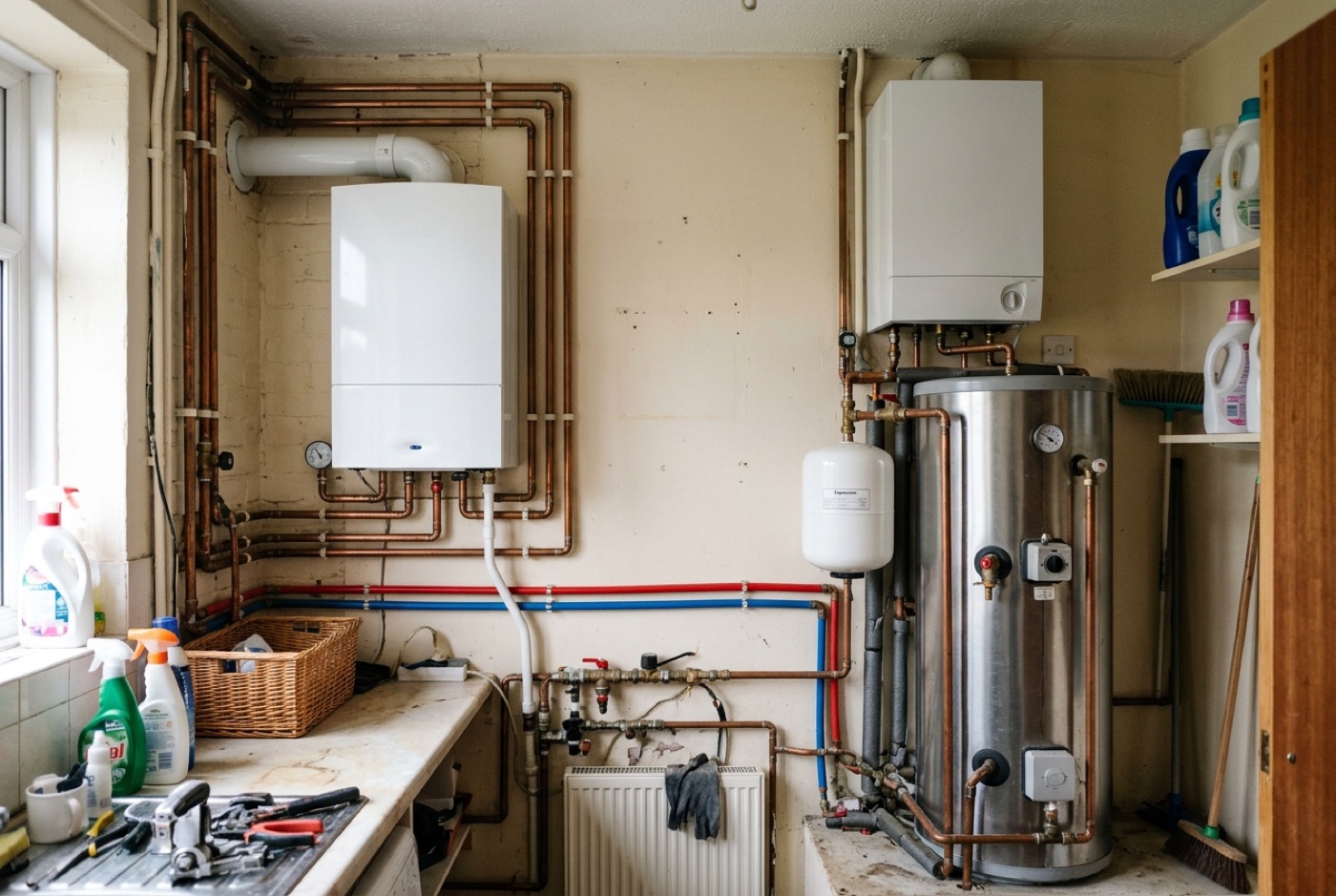
Combi boiler
- Heats hot water instantly on demand at the tap.
- No cylinder, so a smaller footprint.
- Best for one to two-bathroom homes with low simultaneous demand.
- Flow rate drops if two outlets run at once.
System boiler
- Heats hot water and stores it in a sealed unvented cylinder.
- Strong mains-pressure hot water at several taps at once.
- Best for three-plus bathroom homes or households with simultaneous demand.
- The cylinder takes airing-cupboard space.
Heat-only (regular) boiler
- Feeds an open-vented cylinder with a header tank in the loft.
- A legacy system, not usually fitted new unless the header-tank infrastructure is already in place.
- Gravity-pressure hot water, so weaker shower flow without pumping.
- Common in older properties with cast-iron pipework.
Decision framework
- One bathroom, no airing-cupboard preference: combi.
- Two bathrooms, low simultaneous use: combi.
- Two-plus bathrooms, regular simultaneous use: system boiler with an unvented cylinder.
- Big family or a holiday let: system boiler with a larger cylinder.
- Heat pump planned for the future: a system-boiler architecture is heat-pump-compatible; a combi is not.
Switching between types
Switching from combi to system (adding a cylinder) costs more than a like-for-like swap because of the cylinder, the G3 install, extra pipework and a Building Control notification. Switching from system to combi (removing a cylinder) is a smaller premium. Most homeowners stay with the existing type unless household demand has changed materially. Get the upgrade priced as a separate line.
Combi vs system vs heat-only at a glance
| Factor | Combi | System | Heat-only |
|---|---|---|---|
| Hot water | On demand, no store | Stored, high pressure | Stored, gravity-fed |
| Cylinder | None | Sealed unvented | Open-vented + loft tank |
| Best for | 1 to 2 bathrooms | 3+ bathrooms | Like-for-like legacy swaps |
| Heat-pump ready | No | Yes | Partly |
How to choose a trade
- Use a Gas Safe registered engineer, and an accredited installer for the extended warranty.
- For a system boiler with an unvented cylinder, confirm the engineer holds the G3 unvented qualification.
- If a type change is involved, get the extra cost (cylinder, pipework, notification) quoted as a separate line.
Frequently asked questions
Should I get a combi or a system boiler?
A combi suits one to two-bathroom homes with low simultaneous hot-water demand and saves cylinder space. A system boiler suits three-plus bathrooms or households that run several taps at once, giving strong stored hot water. Bathroom count and simultaneous demand are the deciding factors.
Can I switch from a system boiler to a combi?
Yes, and it frees up the airing cupboard, but it is more than a straight swap because the cylinder is removed and pipework altered. Going the other way, combi to system, costs more again due to the cylinder and G3 install. Get the change priced as a separate line.
Which boiler type works with a future heat pump?
A system-boiler architecture with a cylinder is the most heat-pump-compatible, because a heat pump also heats a cylinder. A combi is not. If a heat pump is on your horizon, that points towards a system layout even if a combi would do for now.
Sources

Editor, VettedHome
Adam leads VettedHome's editorial coverage of UK home services. He is the founder and managing director of Muswell Rose, the commercial strategy and modern systems business behind a portfolio of UK information sites, and he researches and writes the plain-English guides that help homeowners choose between installers and trades, drawing on the standards set by the relevant bodies for each job, such as Gas Safe Register, NICEIC, MCS, TrustMark and the Property Care Association. He is clear about what to check before any work starts.
Last updated: