Trades guideGuide: Heating
Electric vs gas heating cost in the UK
In the UK, mains gas costs far less per unit than electricity, and a gas boiler converts most of it to heat, so gas central heating is several times cheaper to run than direct electric heating. A heat pump narrows that gap by delivering more heat than the electricity it uses. Where each makes sense depends on the property and the fuel available.
On this page
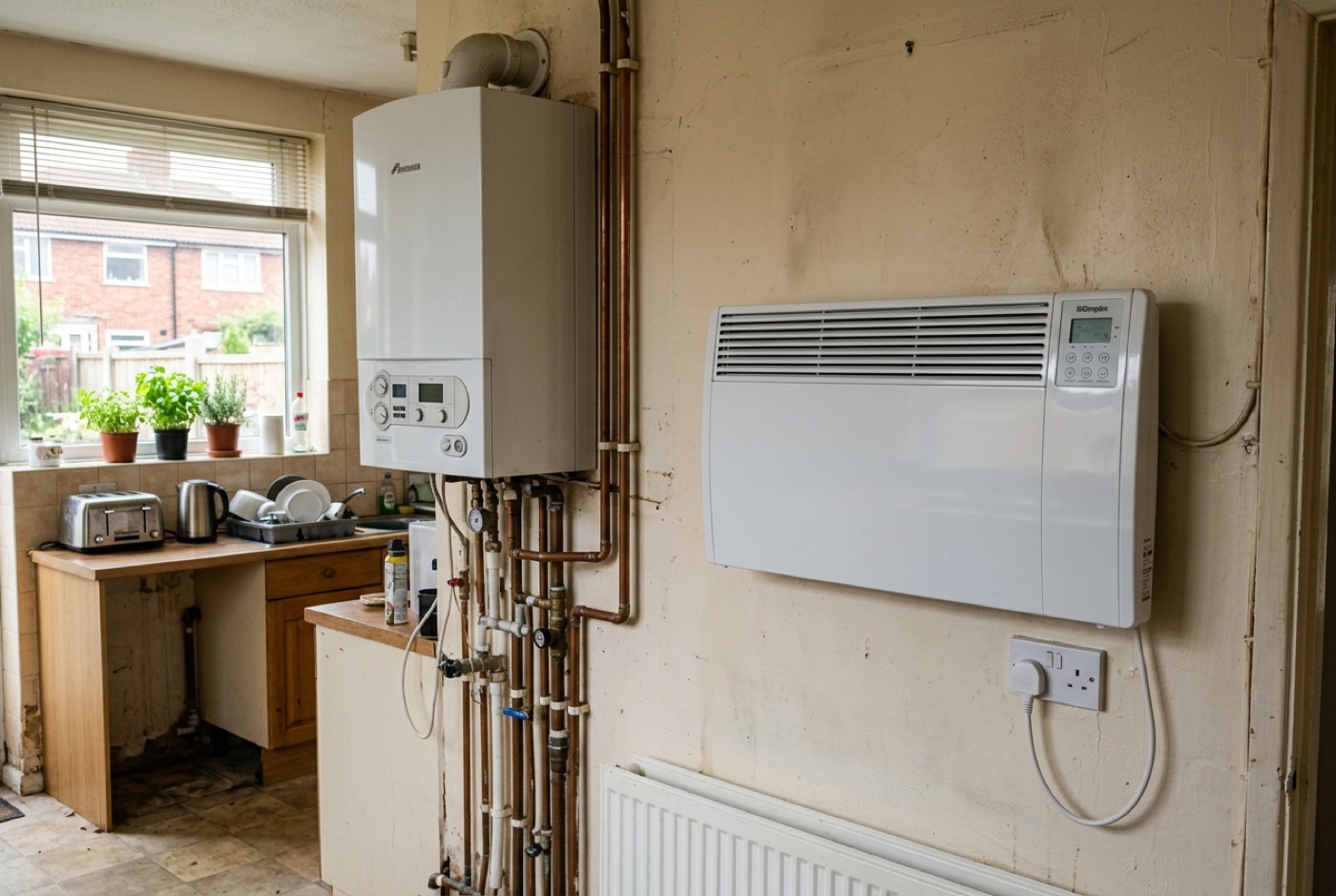
Why gas is cheaper per unit of heat
Mains gas is much cheaper per kWh than electricity on a standard tariff. A gas boiler converts most of the gas it burns into useful heat, while direct electric heating (panel heaters, electric radiators, fan heaters) converts electricity one-for-one but starts from a far higher unit price.
The result is that gas-fired central heating is several times cheaper per unit of delivered heat than direct electric. A heat pump sits in between, because it moves heat rather than generating it, delivering more heat than the electricity it consumes.
When direct electric makes sense
- No mains gas available and a heat pump install is impractical.
- A small flat where the absolute heat demand is low.
- A holiday home used infrequently, where the capex saving outweighs the higher running cost.
- Supplementary heating in a conservatory or one cold room.
When a heat pump makes more sense than gas
- A reasonably insulated property, or one that can be upgraded.
- Sensibly sized radiators or underfloor heating that work at a lower flow temperature.
- Eligibility for the 7,500 pound Boiler Upgrade Scheme grant.
- A household prepared to run the lower-temperature, longer-running flow profile.
Tariff considerations
Smart time-of-use tariffs change the calculation for heat pump users by offering cheaper overnight rates. Direct electric heating users benefit less, because their heat demand is concentrated in the day when rates are highest. Gas tariffs vary less between suppliers, so the saving from switching is smaller on gas than on electricity.
Heating types compared on running cost and fit
| Heating type | Relative running cost | Best suited to |
|---|---|---|
| Gas central heating | Lowest per unit of heat | Homes on the gas grid |
| Air source heat pump | Low, tariff-dependent | Insulated homes, off-grid or low-carbon goals |
| Direct electric | Highest per unit of heat | Small flats, holiday homes, top-up heat |
How to choose a trade
- For gas, use a Gas Safe registered engineer; for a heat pump, use an MCS-certified installer.
- Ask a heat pump installer for a heat-loss survey and the expected running cost on your tariff, not a generic figure.
- Compare a like-for-like gas quote against a grant-backed heat pump quote before deciding.
Frequently asked questions
Is gas or electric heating cheaper to run?
Gas central heating is several times cheaper per unit of delivered heat than direct electric heating, because mains gas costs far less per unit than electricity. Direct electric only makes sense in small or rarely-used spaces, or where no gas is available and a heat pump is impractical.
Where does a heat pump fit in the cost comparison?
Between the two. A heat pump uses electricity but delivers more heat than it consumes, so it runs far cheaper than direct electric and can be competitive with gas, especially on a smart time-of-use tariff. It needs a reasonably insulated home and lower-temperature radiators to perform.
Should I switch from gas to electric heating?
Rarely to direct electric, which is the most expensive to run. If you want to move off gas, an air source heat pump is the sensible route, supported by the 7,500 pound grant, provided your home is insulated and your radiators can run at a lower flow temperature.
Sources

Editor, VettedHome
Adam leads VettedHome's editorial coverage of UK home services. He is the founder and managing director of Muswell Rose, the commercial strategy and modern systems business behind a portfolio of UK information sites, and he researches and writes the plain-English guides that help homeowners choose between installers and trades, drawing on the standards set by the relevant bodies for each job, such as Gas Safe Register, NICEIC, MCS, TrustMark and the Property Care Association. He is clear about what to check before any work starts.
Last updated: