Trades guideGuide: Heat pumps
Heat pump noise rules: MCS 020 in plain English
Every air source heat pump fitted under permitted development in the UK must comply with MCS 020. The headline rule: noise at the nearest neighbour window or door must be 42 dB(A) or quieter. The installer calculates compliance on a standard worksheet before install, and a corner siting often fails because reflective surfaces multiply the calculated noise.
On this page
Why corner sitings often fail
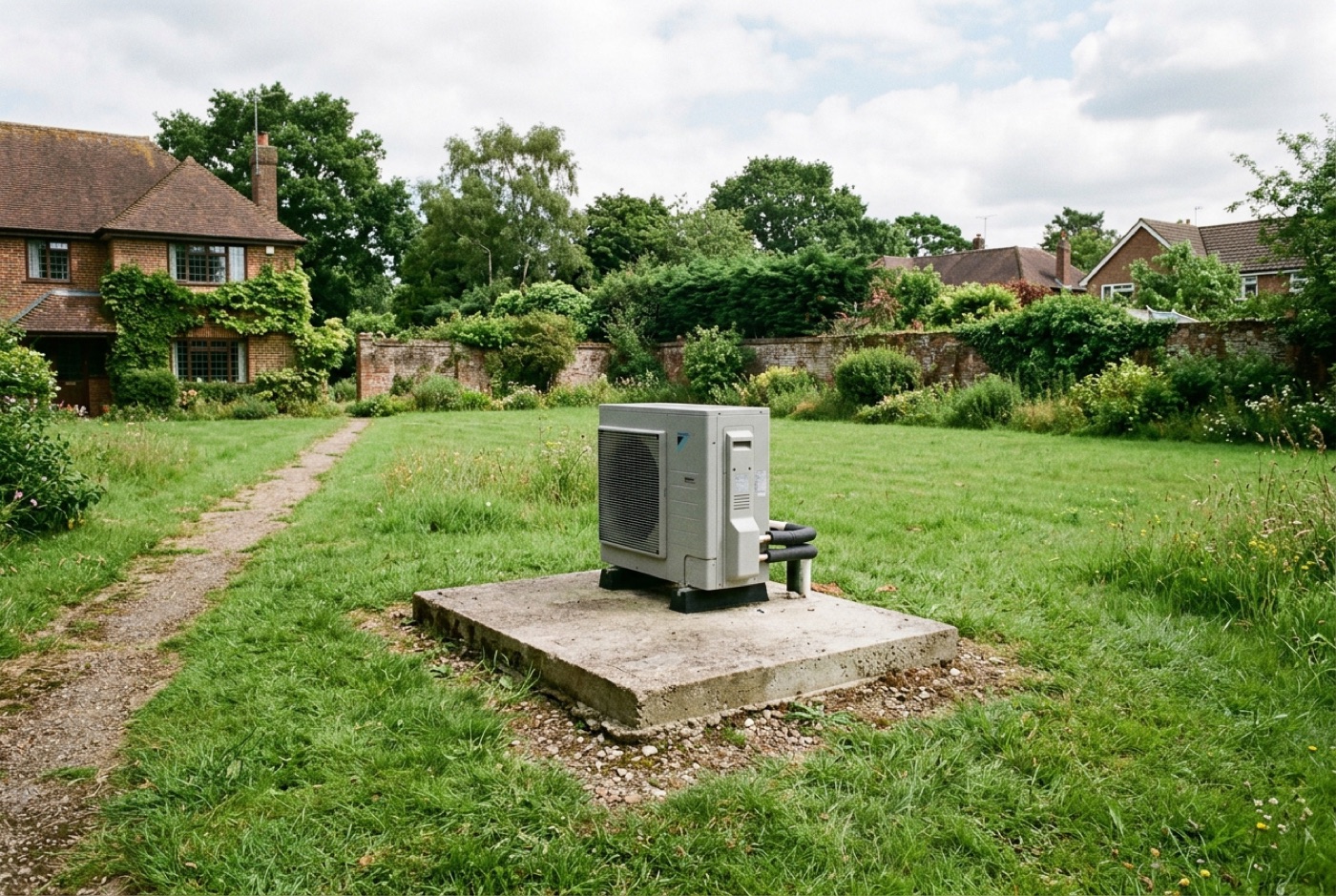
The MCS 020 calculation multiplies the source noise by a directivity factor based on the unit position relative to walls. Free-standing in a garden carries a low factor; against a single wall it rises; in a corner where two walls meet it rises sharply. A corner siting effectively multiplies the calculated noise versus open ground and frequently fails by several decibels.
The worksheet inputs
- The sound power level of the unit from its spec sheet.
- The distance to the nearest neighbour assessment point.
- Reflective surfaces nearby, such as walls, fences and a garage.
- The background noise level of the area, urban versus rural.
- Ground absorption, paving versus grass versus gravel.
What a noise problem looks like in practice
If the calculation fails, the installer must move the unit, choose a quieter model, add an acoustic enclosure, or apply for planning permission instead of relying on permitted development. A unit fixed in a non-compliant position risks both a grant withdrawal and a neighbour complaint, so the calculation must be done before the unit is fixed, not after.
How to choose a trade
- Ask the installer for the completed MCS 020 worksheet before the unit position is fixed.
- Use an MCS-certified installer; the noise compliance and the grant both depend on it.
- If your only viable position is a corner, ask about a quieter unit or an acoustic enclosure before committing.
Frequently asked questions
How loud can a heat pump be under the rules?
Under MCS 020, an air source heat pump fitted under permitted development must be 42 dB(A) or quieter at the nearest neighbour window or door. The installer calculates this on a standard worksheet before install. A unit that fails can lose both permitted-development status and the grant.
Why does where the heat pump sits matter so much?
Because reflective surfaces multiply the calculated noise. A unit in a corner where two walls meet can calculate several decibels louder than the same unit in open ground, which is why corner sitings so often fail MCS 020. Position is one of the biggest levers on compliance.
What happens if the heat pump fails the noise test?
The installer must move it, fit a quieter unit, add an acoustic enclosure, or apply for planning permission rather than rely on permitted development. Fixing a unit in a non-compliant position risks a grant withdrawal and a neighbour complaint, so the calculation comes first.
Sources

Editor, VettedHome
Adam leads VettedHome's editorial coverage of UK home services. He is the founder and managing director of Muswell Rose, the commercial strategy and modern systems business behind a portfolio of UK information sites, and he researches and writes the plain-English guides that help homeowners choose between installers and trades, drawing on the standards set by the relevant bodies for each job, such as Gas Safe Register, NICEIC, MCS, TrustMark and the Property Care Association. He is clear about what to check before any work starts.
Last updated: