Trades guideGuide: Gas
Landlord gas safety certificate (CP12): the rules and renewal
Every UK private rental with a gas appliance, pipework or flue must be inspected once every 12 months by a Gas Safe registered engineer under the Gas Safety (Installation and Use) Regulations 1998. The output is the CP12, the Landlord Gas Safety Record. Without one in date you cannot legally let or re-let the property.
On this page
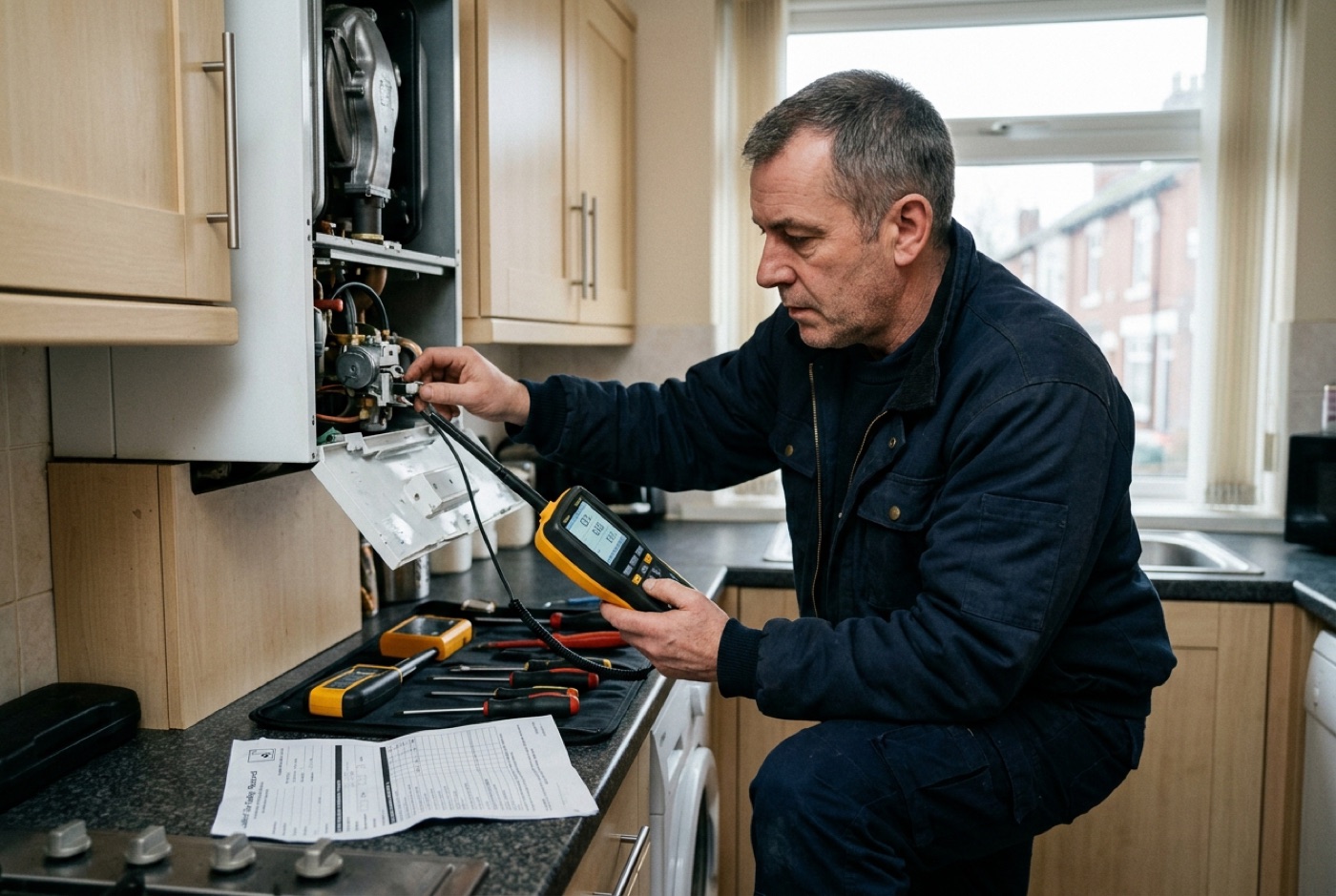
What the engineer must inspect
- Every flue.
- Every gas appliance owned by the landlord, such as the boiler, hob, oven, fire and water heater.
- The gas pipework, including concealed runs the engineer can reasonably access.
- The ventilation arrangements for each appliance.
- The combustion performance, via flue gas analysis, on every appliance.
The two-month renewal window
Since the 2018 amendment to the regulations, the HSE says the annual check can be carried out up to 2 months before it is due while keeping the original deadline date, as if it had been done exactly 12 months after the previous check. Renew earlier than that and the new 12-month clock starts from the inspection date, shortening the cycle.
Tenant access and the documented attempt
If a tenant refuses access, the landlord is not automatically off the hook. The HSE expects evidence of reasonable attempts: a notice left after a missed visit and a letter explaining that the check is a legal requirement, and its inspectors look for at least three attempts. Keep dated copies. The CP12 cannot be issued without an inspection, but documented attempts protect against the prosecution test.
Penalties
The HSE treats landlord gas safety as a high priority and says a breach could result in a substantial fine and/or a custodial sentence. Check your landlord insurance policy wording too, as cover conditions vary between insurers.
Issuing the certificate
A copy must go to existing tenants within 28 days of the check, and new tenants must receive a copy before they move in. The HSE allows the record to be sent electronically, such as by email, provided the tenant is happy with that and can access it. Keep a retained PDF in the tenancy file.
What it costs
- CP12 / Landlord Gas Safety Record
- Get a quote Varies with the number of appliances. Bundling with the annual boiler service in one visit is usually cheaper.
We do not publish a single fixed price; it depends on the number of gas appliances. Bundle deals from a single Gas Safe engineer are usually cheaper than separating the visits.
How to choose a trade
- Use a Gas Safe registered engineer and verify their registration number, including the appliance categories they are qualified for.
- Diarise the renewal for the 2 months before it is due to keep the original deadline date.
- Keep dated evidence of access attempts and a retained PDF of each certificate in the tenancy file.
Frequently asked questions
How often does a landlord need a gas safety check?
Once every 12 months, for every rental with a gas appliance, pipework or flue, under the Gas Safety (Installation and Use) Regulations 1998. The check produces the CP12 / Landlord Gas Safety Record. Without one in date you cannot legally let or re-let the property.
Can I renew the CP12 early without losing the date?
Yes. The HSE says the check can be done up to 2 months before it is due while keeping the original deadline date. Renew earlier than that and the new 12-month clock starts from the inspection date, shortening your cycle.
What if my tenant will not give access for the check?
You must show evidence of reasonable attempts, such as a notice left after a missed visit and a letter explaining the legal requirement, and keep dated copies. HSE inspectors look for at least three attempts. The certificate cannot be issued without an inspection, but a documented paper trail of attempts protects you against the prosecution test if access is genuinely refused.
Sources

Editor, VettedHome
Adam leads VettedHome's editorial coverage of UK home services. He is the founder and managing director of Muswell Rose, the commercial strategy and modern systems business behind a portfolio of UK information sites, and he researches and writes the plain-English guides that help homeowners choose between installers and trades, drawing on the standards set by the relevant bodies for each job, such as Gas Safe Register, NICEIC, MCS, TrustMark and the Property Care Association. He is clear about what to check before any work starts.
Last updated: