Trades guideGuide: Gas
Gas safety check vs CP12: what is the difference?
In conversation, "gas safety check" and "CP12" are used interchangeably, but they are technically different. A gas safety check is the physical inspection a Gas Safe engineer performs on every gas appliance, flue and pipework. The CP12, also called the Landlord Gas Safety Record, is the written certificate produced once the check is complete.
On this page
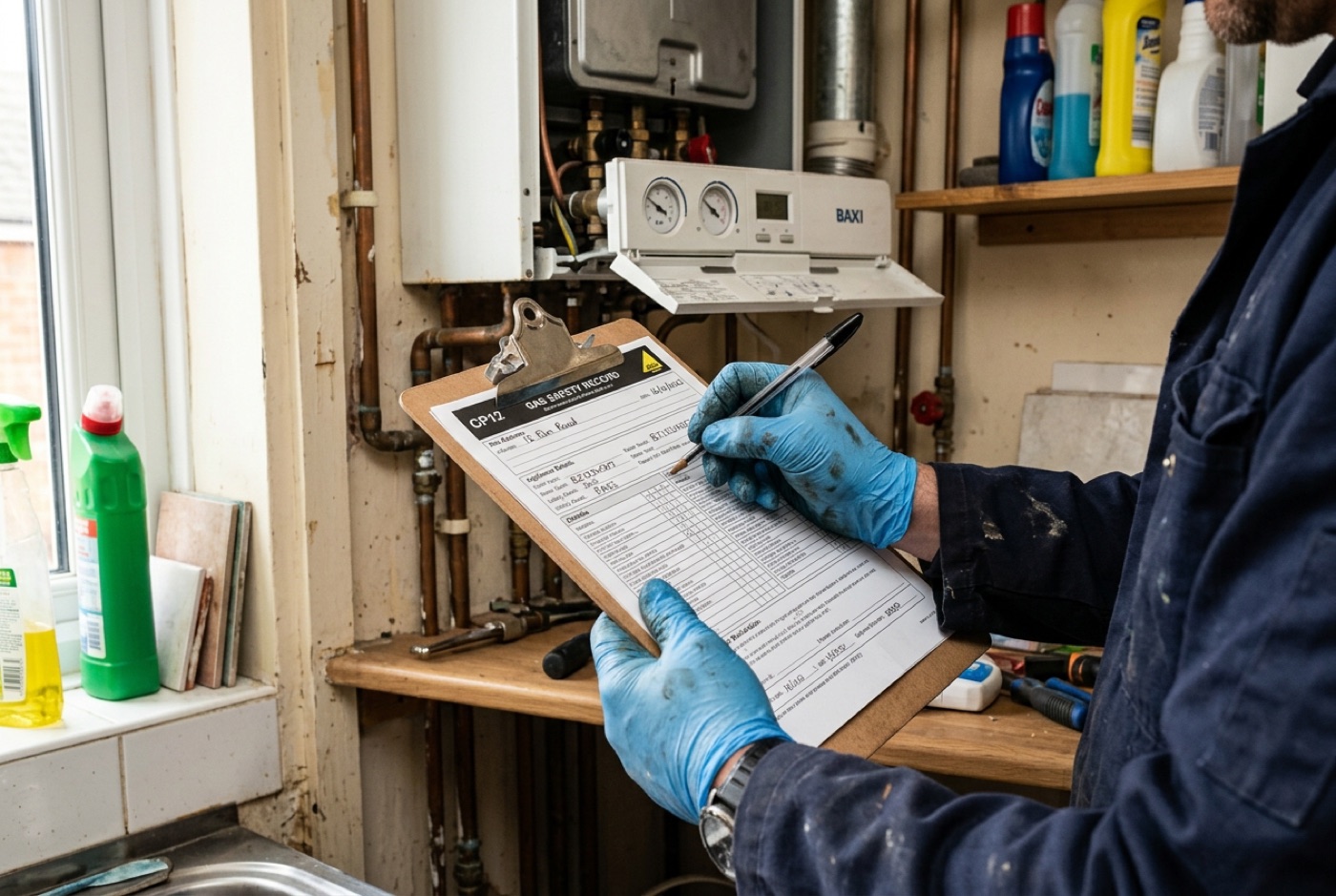
The inspection (gas safety check)
- A visual inspection of every gas appliance, flue and pipework.
- Flue gas analysis on each appliance.
- A working and standing pressure test at the meter.
- A ventilation check for each appliance.
- A combustion performance test under high and low fire.
The certificate (CP12)
CP12 originally stood for a pre-2009 register proforma. When Gas Safe replaced the old register, the name CP12 stuck colloquially even though the document is now officially the Landlord Gas Safety Record. It is the same certificate with a different name on the masthead.
When you need each
- Landlords: an annual gas safety check plus an issued CP12, required by the 1998 regulations. Without it you cannot legally let the property.
- Homeowners: not legally required, but most home insurers ask for a recent gas safety check at renewal, and buyers often request one.
- Holiday-let owners: a required annual check under the relevant framework and most platform terms.
What "safe" means on the certificate
Each appliance carries a status: passed, at risk, immediately dangerous, or not to current standards. An at-risk or immediately-dangerous appliance is disconnected on the spot pending repair, and the certificate lists the work needed to reinstate it. A certificate with all appliances passed is the standard outcome.
What it costs
- Gas safety check + CP12
- Get a quote One inspection produces the certificate. Bundling with the boiler service is usually cheaper.
Gas safety check vs CP12 at a glance
| Aspect | Gas safety check | CP12 (Landlord Gas Safety Record) |
|---|---|---|
| What it is | The physical inspection | The written certificate from it |
| Produced by | A Gas Safe registered engineer on site | The same engineer, after the check |
| When | During the visit | Issued once the check is complete |
| Who must have it | Anyone wanting their gas checked | Landlords, by law, annually |
| Records | The work carried out | Each appliance status: passed, at risk or dangerous |
How to choose a trade
- Use a Gas Safe registered engineer and confirm the appliance categories on their registration.
- Ask for the CP12 / LGSR to be issued and emailed promptly after the check.
- If any appliance is marked at risk or immediately dangerous, get the listed remedial work quoted before reinstatement.
Frequently asked questions
Is a gas safety check the same as a CP12?
Not quite. The gas safety check is the physical inspection of your appliances, flue and pipework. The CP12, now officially the Landlord Gas Safety Record, is the certificate produced from that inspection. People use the terms interchangeably, but one is the work and the other is the paperwork.
Do homeowners need a CP12?
No, it is not a legal requirement for owner-occupiers, only for landlords. That said, many home insurers ask for a recent gas safety check at renewal, and buyers often request one during a sale, so an annual check is still worth having for peace of mind.
What do the status codes on a CP12 mean?
Each appliance is marked passed, at risk, immediately dangerous, or not to current standards. An at-risk or immediately-dangerous appliance is disconnected on the spot until it is repaired, and the certificate lists the remedial work. All appliances passed is the normal, expected outcome.
Sources

Editor, VettedHome
Adam leads VettedHome's editorial coverage of UK home services. He is the founder and managing director of Muswell Rose, the commercial strategy and modern systems business behind a portfolio of UK information sites, and he researches and writes the plain-English guides that help homeowners choose between installers and trades, drawing on the standards set by the relevant bodies for each job, such as Gas Safe Register, NICEIC, MCS, TrustMark and the Property Care Association. He is clear about what to check before any work starts.
Last updated: